The Butler Institute of American Art, Youngstown, Ohio
Hometown Stories: Youngstown Steel Kitchens was my first exploration of Rust Belt communities. I constructed a prosthetic memory by integrating my narrative with an attempt to understand the social history of the region, events of deindustrialization, and these legacies in the Industrial Midwest. At the opening, I spoke with community members. They told me about working for Mullins Manufacturing who fabricated Youngstown Steel Kitchens and how their lives and the city changed when they closed in 1973. These conversations caused me to reflect on how to frame the questions that I hoped my work would address. Listening to their anecdotes eventually led me to incorporate on-camera interviews with community members as part of my exhibitions.
Hometown Story: Youngstown Steel Kitchens, 2012 Exhibition Documentation from Jennifer Vanderpool on Vimeo.
When the curator invited me to exhibit at the museum, I did not realize how this opportunity would impact the trajectory of my practice. This invitation forced me to confront myself and consider my family’s working-class story and the deindustrialized city where I grew up. I examined the plight of workers in Los Angeles and Bogotá. Yet, I did not know the details of my immigrant grandparents’ lives, except that they moved from Appalachia in 1965 for my grandfather to work at the General Motors plant. Nor did I know the stories of workers in my hometown of Youngstown.
Hometown Story: Youngstown Steel Kitchens, 2012 Historic Advertisements from Jennifer Vanderpool on Vimeo.
My knowledge of Youngstown was limited to childhood memories of sitting in the backseat of my parent’s car. I remember looking out the window at the lovely homes from a forgotten era along 5th Avenue, and the lurching remains of Youngstown Sheet and Tube. I began to research the industrial history of the city. I discovered Bruce Springsteen’s ode to the mill workers. The visual image portrayed in his lyrics reminded me of that childhood memory of the rusted mill. While there were plenty of stories about Youngstown to investigate, I was still looking for a topic that would further my understanding of the city and address gender equality themes. I eventually discovered Mullins Manufacturing, which designed and fabricated Modern kitchens. The portrayal of women in company advertisements fascinated me. These images reminded me of the stories my grandmother told about her youth during the Fifties. I pictured women wearing swing dresses topped with twin set cardigan sweaters and these feminine ladies’ ongoing struggle for gender equality.
Hometown Story: Youngstown Steel Kitchens, 2012 Projection from Jennifer Vanderpool on Vimeo.
“The Mullinaires,” 1953, The Mullins Manufacturing Company from Jennifer Vanderpool on Vimeo.
“The Last Word in Automatic Dishwashing,” 1950, The Mullins Manufacturing Company from Jennifer Vanderpool on Vimeo.
Ohio-born and California-based artist Jennifer Vanderpool was raised near Youngstown. Vanderpool’s work always has a quality of regional referentialism, but with this exhibition she comes full circle and embraces her roots as a Midwesterner. Vanderpool’s previous exhibitions, across three continents, have created an immediate visceral reaction in us as we respond to the close examination of women’s roles in both public and private. No territory has been off limits and the topics are always intensely personal, from domestic roles in relationships to the female sweatshop worker’s rights within her own family tree. The title of Vanderpool’s show at The Butler Institute of American Art, “Hometown Stories: Youngstown Steel Kitchens” might mentally lead us down the path to a simple historical account of the glory days of the Youngstown Steel Kitchens, yet this is no simple curated collection of archival pieces. Vanderpool is never content to tell the straight story and thus dictate what we should think and feel. Prepare to remember and feel the lure of nostalgia, but also be prepared to have your memories and assumptions poked and prodded.
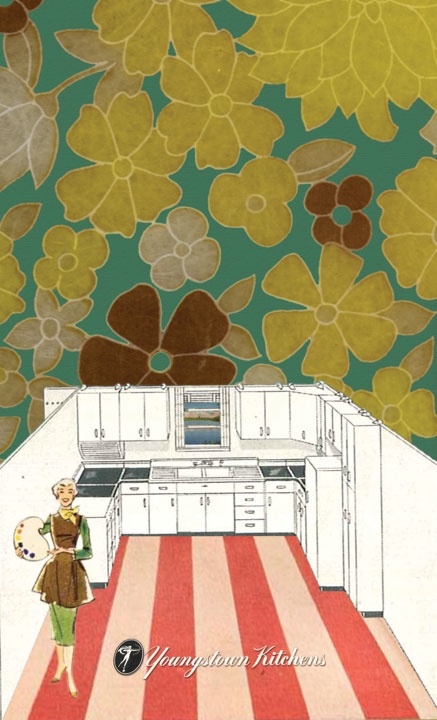
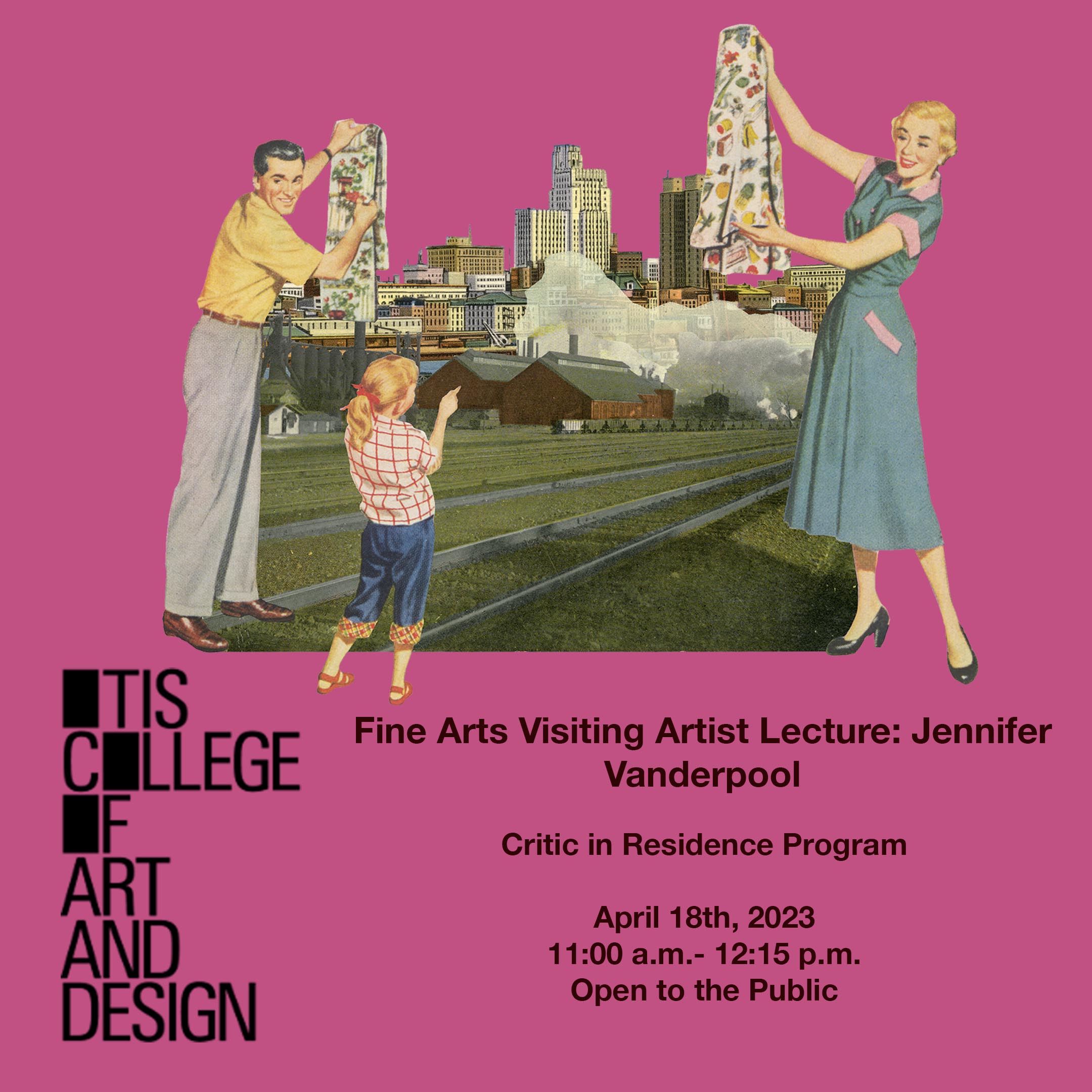
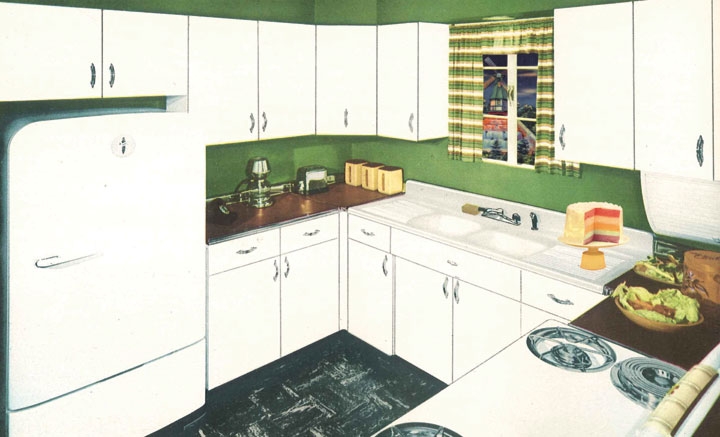
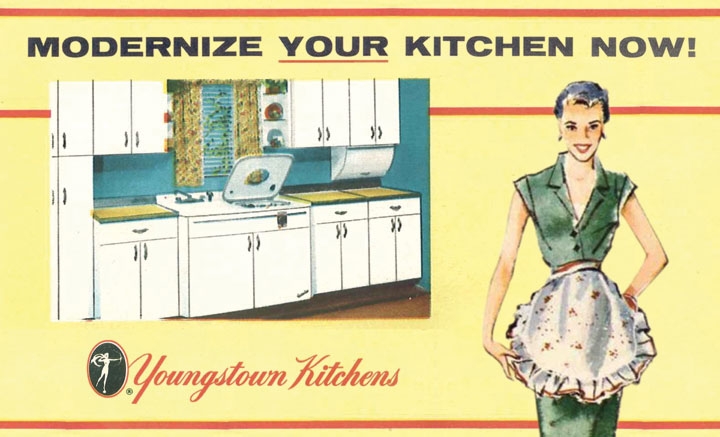
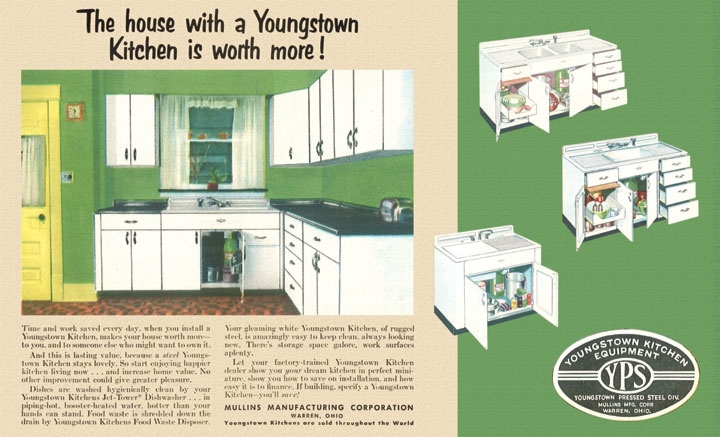
With the Hometown Stories installation, Vanderpool explores what she calls the “domestic industrial” side of the steel mills. Youngstown Steel Kitchens were built by Mullins Manufacturing Corporation, a subsidiary of Sharon Steel. Vanderpool created archival digital Archival Prints and a media work that incorporates images of Youngstown Steel Kitchens. These quirky pieces evoke the mythology of mid-century domestic bliss. When these elements are arranged amongst the Mullins Manufacturing Corporation’s kitschy salesman’s archival video footage and travel kit as well as remnants of a steel kitchen, the discomfort sets in. We know that those glory days are over, and the landscape was forever altered by the mill closures. But we’re also forced to examine the role of women and family that were simultaneously being altered dramatically during that period of American history, and any feelings of lingering nostalgia or anger this may elicit. Like her other pieces, Vanderpool’s work lives in irony and excess, and we cannot experience her art without having an extreme emotional and sometimes physical response.
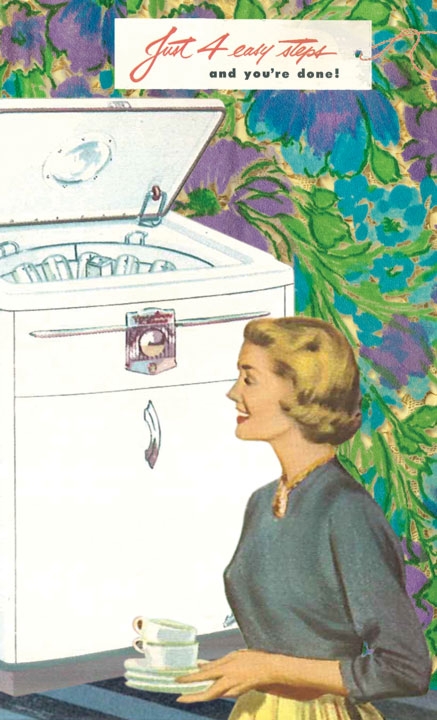
Consistently, Vanderpool’s work has an activist undercurrent. Her two main passions are worker’s rights and women’s issues. That is not to say that she makes an activist statement with her work, but rather that Vanderpool is more interested in identifying and examining social justice issues, generally through pop culture. Her work perfectly identifies the volatile touch points where the subtle conflicts in equality lie. She doesn’t answer questions, but simply presents the conflict in sculptures and environments that we are drawn into, sometimes happily, and often uncomfortably. Her images are at first so familiar that we naively enter a conversation with the art with the expectation of seeing something that we know and feel comfortable with. Then, when we have lived in the pieces for a while we start to wonder what it is that has flipped that feeling. Why is the vintage kitchen that made us smile when we entered the room suddenly make us feel, well, not like smiling anymore?
Teresa Wilmott is an independent curator and writer based in Claremont, California. She holds a B.A. in Linguistics from the University of California, San Diego.